
Written By: Aubrey Campbell
Edited By: Anna French
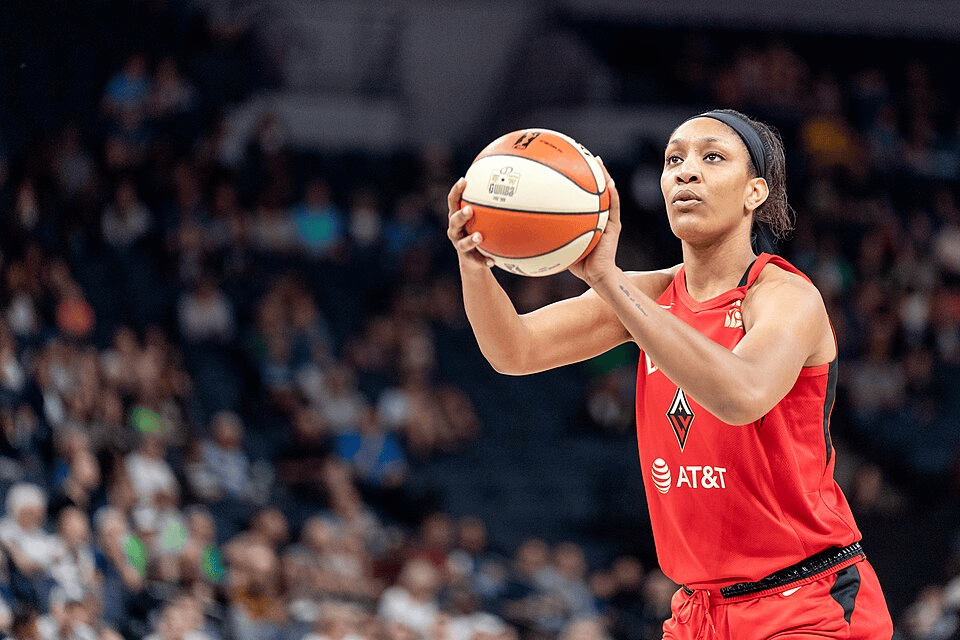
Photo courtesy of Lorie Shaull, licensed by Creative Commons Attribution-Share Alike 2.0.
Over the past several years, the popularity of the WNBA has skyrocketed, becoming the fifth most popular professional sports league in the US, according to Forbes. In 2024, the league was the fastest-growing professional sports brand, and in the years since, it has shown no sign of slowing down. According to a WNBA Communications post on October 14th, 2026, this season has continued to break records, with national TV audiences surpassing 91 million, doubling the 2025 record; 51 telecasts reaching an audience of more than 1 million people, making it the most-attended season to date. While this deserved and long-fought-for attention has brought exponential growth and expansion to the league, it has also generated an alarming increase in racist attacks on players. Throughout the past several seasons, Black players have commented on the noticeable escalation in racist comments they receive from fans, both in person and online. In response, sports reporters are focusing progressively more on this issue, drawing attention away from what the players actually want recognition for: basketball. The racist harassment that the WNBA’s predominantly Black players face is increasingly excused as an inevitable consequence of the popularity they have long sought. In turn, Black players’ responses to these racist attacks are weaponized to perpetuate further negative attention, enabling deeper racial divides within the league.
Over the past few seasons, more and more players have come forward, calling out the racist attacks they are experiencing from fans. In August of 2026, Los Angeles Sparks forward Dearica Hamby, a Black woman, posted a screenshot of a text message she had received to her X account that read, “Dirty ass n—r. They should put you in a zoo. Animal.” In June of 2026, Black Connecticut Sun forward Alyssa Thomas came forward saying she had received death threats after being issued a one-game suspension for a play involving white Indiana Fever guard Caitlin Clark, expressing that “people are sending racial slurs and all types of stuff.” The increasing number of attacks has changed the energy of the league, leaving Black players on edge and constantly questioning their safety.
The effects of this environmental shift have begun manifesting in games. On September 29th, 2026, during the second game of the first round of the 2026 playoffs, white Indiana Fever guard Sophie Cunningham fouled Black Aces forward A’ja Wilson. After the play, Wilson noticed a white man, sitting in the second row, pointing and yelling at her. Wilson began yelling back, walking off the court towards the fan’s seat. This interaction immediately sparked intense debates online, with some fans condemning Wilson’s reaction and others citing the man’s behaviour as an example of another racist attack. This incident demonstrates the rising racial tensions within the league. Fans weaponized the incident to advance various positions in previously existing racial debates. Fans who argued the incident was an example of a racist attack made unfounded claims on social media that the man had yelled a racial slur at her. While critics of Wilson labelled her reaction as aggressive, invoking long-standing tropes that pathologize the anger of Black women. Furthermore, Wilson’s reaction is also a product of the current climate of the league. In an environment where racial attacks are becoming increasingly normalized, Black players are forced to be hypervigilant, reacting more extremely to situations they would otherwise ignore.
By framing this abuse as inevitable and undermining the players who speak out, media members and fellow players normalize racism while shifting responsibility away from those perpetuating it. This was most recently prevalent in the reaction and coverage of the incident involving A’ja Wilson during the 2026 playoffs. In an article published in The Athletic on October 1st titled “The WNBA wanted attention. A’ja Wilson should know what comes with it,” author Jason Lloyd criticizes both Wilson’s actions and the league’s reaction. He writes, “Fair or not, some of this is what money represents. It’s not just a number in a press release. The money is that person in the front row.” Here, Lloyd argues that the rise in harassment from fans is simply a price to pay for more eyes and investment in the league. Echoing Lloyd’s argument, white Indiana Fever forward Sophie Cunningham responded to A’ja Wilson in an episode of her podcast, “No Hesitation,” calling Wilson ungrateful, telling her to “grow up,” and saying, “if you really want sports fans, you’re gonna get sports fans.” These reactions from Cunningham and Lloyd completely ignore the undeniable role race has in the way media treats players as well as the growing racial tensions in the league, while simultaneously undermining Wilson’s maturity, framing her as ungrateful and childish.
This demeaning and belittling rhetoric used by members of the media and players creates a permission structure for fans to further perpetuate this hatred. Often, this is achieved through placing Black and white players in opposition, glorifying white players while demeaning Black ones. Responding to a post on X commenting on the A’ja Wilson incident, user @ATomalty wrote, “The black women basketball players are angry that they are not getting the ad commercials like Caitlin Clark. What they do not realize is that outbursts like these and incidents like A’ja Wilson going into the stands to confront a fan (which should have resulted in a suspension) do not endear advertisers to hire them for commercials. Advertisers want athletes to act like adults, not temper tantrum little kids.” Here, Tomalty not only homogenizes all Black players in the league, but he also places them in direct opposition to Clark, a popular white guard for the Indiana Fever. By presenting Clark as the model which women’s basketball players should strive to achieve, he places her on a pedestal while arguing that Black players are inferior, further reinforcing a racial divide. Moreover, his comparison of Black players to “temper tantrum little kids” is incredibly infantilizing, suggesting their reactions are based in irrational emotions rather than their lived experience. This language works to devalue their agency and intelligence.
The justification of the increasing racist attacks on players as the unavoidable outcome of league growth, and the targeted responses by media members and players to undermine and negate Black players’ reactions and accusations create an environment where fans feel warranted in perpetuating further hate. Ultimately, this works to deepen racial divides and increase tension across the league. Trash talking has always been a part of sports and the WNBA, which is a highly competitive league with incredibly passionate players. However, league administration must do a better job enforcing the boundary between trash talk and racism, hatred, and bigotry. When these boundaries are crossed, sufficient disciplinary action must be taken. WNBA administration, franchises, and media members all hold the responsibility to end the cycle of racism that has emerged in recent years. It should not be left to the Black players experiencing this vitriol to advocate for themselves. The league is finally getting the attention it deserves, and every player who has contributed to that growth deserves to feel safe playing in the league.

