
Written by: Hanna Yaghoubi
Edited by: Laurence Desjardins
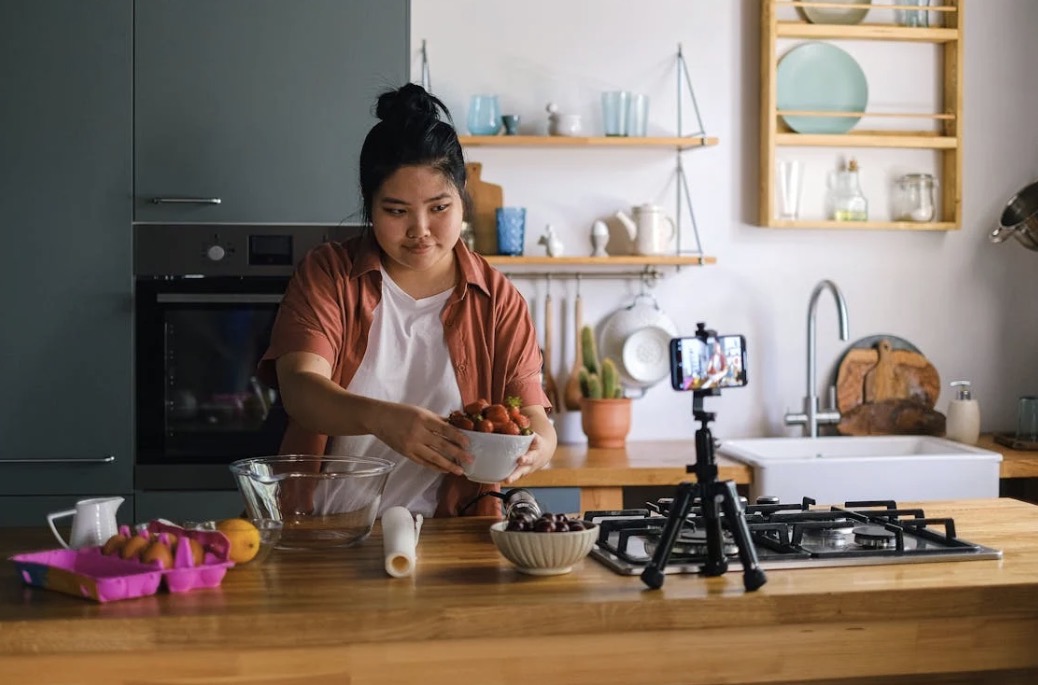
If systematic exploitation of women and their bodies is inescapable under patriarchal rule, the commodification of the female body is the only seemingly rational response to maintain any remaining autonomy. In the curation of an exploitable self-image, there is a clear choice: Madonna or the Whore. But if these options for women are pre-established, can this choice truly be viewed as autonomous? In the current consumer-driven society, one of the most marketable commodities is the self-objectification of women. One of the most prominent examples of this is influencers on platforms like TikTok, capitalizing off of a docile, hyper-domesticated image of femininity. These creators construct an image that parallels the “devoted housewife”, one rooted in their loyalty to a male partner. Both forms of characterization market a fantasy of empowerment, but both are a performance, a display rehearsed within patriarchal expectations. This article asks: can autonomy exist within a career of self-commodification, or are these digital performances a re-write of the same control?
A Domestic Fantasy: Nara Smith as the Image of Devotion
Influencer Nara Smith exemplifies an aesthetic of domestication by curating content that emphasizes her role as a devoted wife and mother. In her videos, Nara Smith presents herself cooking, cleaning, and caring for her family in an excessive but polished, soft-spoken manner. She portrays her existence as primarily dedicated to the service of others. As Judith Butler argued in their theory of gender performativity, acts of gender, specifically femininity, are not expressions of self-determination, but rather a performance of a rehearsed aesthetic. Nara Smith’s performance, while often framed as admirable or empowering, demands closer scrutiny through the lens of feminist existentialism. Additionally, Simone de Beauvoir identified women as “the Other”, as the antithesis of men in her theory of subject-object dichotomy. Nara Smith’s curated image embodies this dichotomy perfectly, displaying a life organized around meeting the needs of her husband and children rather than asserting independent subjectivity. Her portrayal of self-sacrifice does not simply reflect a personal choice–it reenacts a deeply ingrained cultural script that highlights the expected devotion of a woman in a traditional family. The combination of her soft speaking tone, natural ingredients, and cohesive visuals works to transform this demonstration of submission into aesthetic pleasure. Ultimately, hyper-domesticated content, much like hyper-sexualized labour, upholds the same core principle: women’s self-worth is measured relationally through their service to men. Whether through desirability or devotion, these models reinforce self-objectification, presenting conformity as autonomy and masking the persistence of patriarchal domination. Therefore, self-submission reinforces gender power dynamics and thus upholds our patriarchal system.
Carnal Cuisine: CookingWithKya and the Patriarchal Bargain
In contrast to Nara Smith’s characterization as hyper-domestic, there are creators like CookingWithKya who rely on a blend between the erotic and the domestic. Her content is rooted in her self-Othering, as she creates a persona of the other woman–one that competes with women for the attention of their male partners. Beauvoir suggested that to be passive, in this case with self-objectifying careers, implies a performance of agency. Women who engage in these forms of labour are not only being told how to act, but are shaping their sense of self in the anticipation of scrutiny and financial or emotional validation. For CookingWithKya, cooking is presented as a sensual act in her content by wearing revealing clothes, presenting food in ways that highlight her physical sexuality, all while making comments to a targeted male audience. This crossover is particularly disturbing because it cloaks objectification in language and acts of her self-confidence. She also chooses to curate her content towards a male audience, especially those in relationships. As a result, her content becomes geared to fulfilling patriarchal expectations and the desires of women. Her choice to outwardly do so means that CookingWithKya utilizes all aspects of the patriarchal gaze, combining sexualization with care work. The case of CookingWithKya presents a clear embodiment of what Deniz Kandiyoti coined as the patriarchal bargain. The concept framed women’s compliance as an adaptation to benefit within a constraint, rather than a blind acceptance. Through curated images of sexualized domesticity, CookingWithKya attracts male attention, trading personal authenticity for financial gain and social popularity. Her real but limited agency is exercised exclusively within the confines of male desires. On the other hand, while a performance of eroticized domestic labour doesn’t subvert patriarchy, women like CookingWithKya successfully collaborate with it to garner attention and profit. Thus, this demonstrates how confusing power or visibility for autonomous control becomes a trap. The women portray a sense of agency while simultaneously intensifying the aesthetic demands desired of women. This example illustrates how empowerment seems identical to endurance, where profit and growth are often mistaken for a form of self-definition.
Conclusion: The Limits of Autonomy
These two approaches identify a paradox: the coexistence of autonomy and subjugation, allowing performance and monetization simultaneously. Influencers and content creators in hyper-sexualized and domesticated roles may claim their choices are expressions of autonomy, but the social consequences extend beyond the individual. Celebrated for their control over image and financial success, these women become cultural models; a benchmark for others to be judged by, and to judge themselves. Thus, women’s false performances of empowerment become normative, prescribing roles rather than expanding choices. If beauty and desirability are defined by patriarchal standards, women can never truly choose how to present themselves. When feelings of self-worth are entangled with external validation, autonomy is profoundly compromised. Living authentically means resisting becoming an object, but in a system that rewards objectification, such resistance is quite difficult to obtain. Finally, it seems that true autonomy cannot be rewritten into new styles of self-led careers; no matter the superficial benefits, the impacts on the rest of viewers, and young adults specifically, far outweigh them.
Bibliography
Photo: Accessed from Pexels. https://www.pexels.com/photo/woman-recording-herself-while-cooking-12673813/
 Intersections