
Written By Leslie Carmelotes
Edited By Carmen Faria
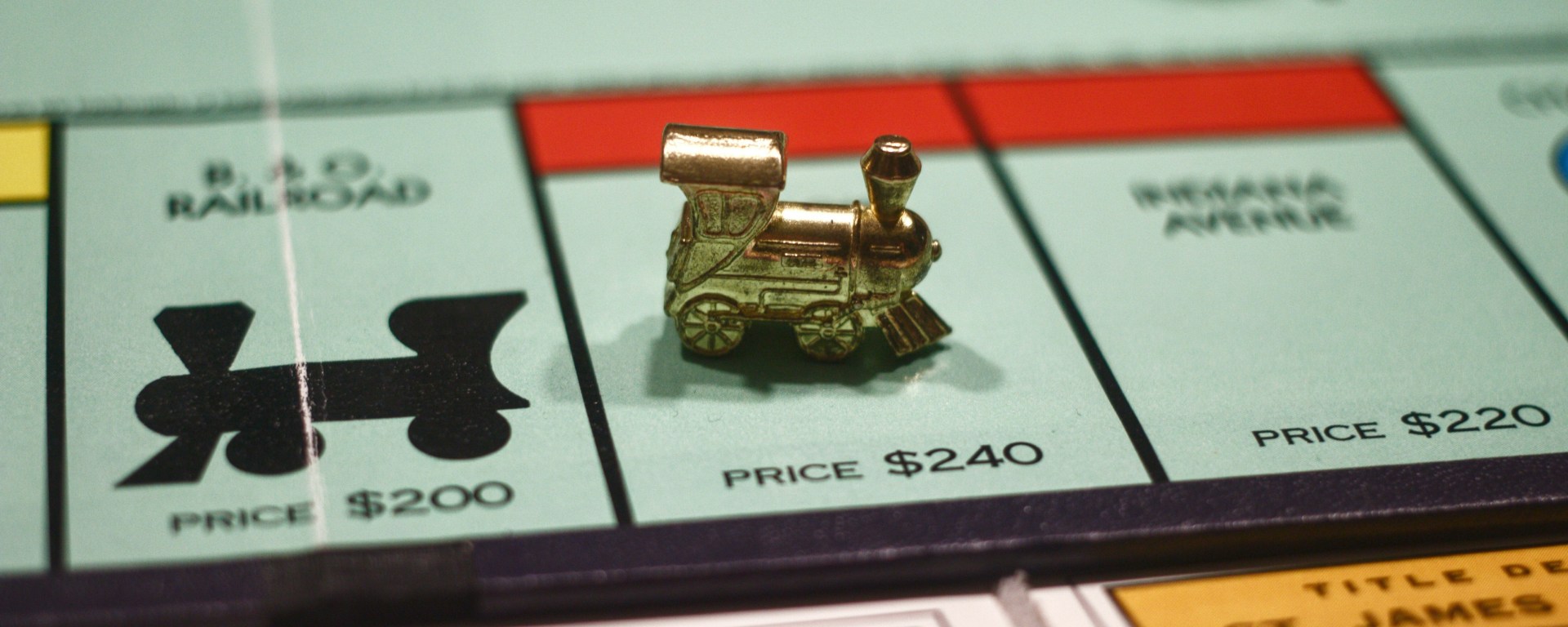
As a child, my parents encouraged me to play the board game Monopoly by Hasbro, believing it was a game that would make me smarter. While it didn’t appeal to me back then, I’ve recently begun playing Monopoly with my partner, and realized how much the game embodies the American Dream and its capitalistic ideals. This further piqued my curiosity about the game’s origins, the goal in its creation, and how it tied into the socio-economic spheres of the past and present. I initially posited that Monopoly meant to teach future generations how to survive in an unstable economy amidst the weight of the Great Depression. Indeed, Monopoly as we know it is a product of the 1930s, marketed as a ray of hope to Americans by turning economic horrors into a game that could offer solace to lower and middle-class families. In fact, the reason why Monopoly is a relevant game today is because the world’s socioeconomic status hasn’t gotten much better. As such, Monopoly is arguably one of the best educational games for kids, incorporating essential life skills into something more digestible for young minds. My research brought me to another hard conclusion: Monopoly is a political game, as it directly represents American nationalism, the American dream, and capitalist ideals. This is embedded in the game’s history, its rules, and its use of iconography and visual design, while also highlighting which demographics were excluded from this ideal future.
Through the medium of a family board game, Monopoly encapsulates the societal tensions in America shortly after WWI, including racial and gender issues. A blatant example of misogyny lies in the assigned creator of the game by its parent company. Monopoly, in its earliest conception, was first created by Lizzie Magie under the name The Landlord’s Game in 19041. Its original goal was to show fellow Americans the benefits of an economic system where each person gets rewarded with personal capital based on shared land tax, thus providing more financial relief for the lower classes2. Magie was a progressive leftist, and though she initially created two versions of the game, the first reflecting more communist ideals, it was ultimately the capitalistic version that took flight 3. The competitive race to be the last one standing sold the idealized dream that anyone can make it despite the odds being out of their favour with enough hard work, strategy, and luck. One of Magie’s neighbours introduced The Landlord’s Game to their friend Charles Darrow, a financially struggling, recently laid-off family man; he then stole her ideas, re-worked them, and pitched them as a game called Monopoly to the Parker Brothers in 1935, where it soon soared in popularity4. The game was especially relevant considering it followed the 1920s Great Depression, a dark time when the United States was stuck “without [any] form of unemployment insurance or social security”5 for its financially bankrupt citizens. As a man down on his luck himself, Darrow perfectly fit the bill for the role of Monopoly’s creator; his status as the traditional head of the household trying to provide for his family through tough economic times was relatable to the average American6. Magie, on the other hand, was painted in a negative light for her progressive stances and feminist ideals, being the head of her own household and unmarried, all of which went against traditional women’s values7. In fact, she actively proclaimed that her game was a social critique meant to disprove capitalism as the better route and that “the first set of rules was morally superior” to Darrow’s stolen version8. Magie also wished to denounce the “dismal position of women” in her initial creation and was initially overjoyed when the Parker Brothers sought to buy the rights to her original game9. However, the truth to their thievery eventually came to light, and the message couldn’t have been clearer: the Parker Brothers had no interest in honouring Magie’s wishes, instead choosing to capitalize on her project themselves. Monopoly was now an all-American board game, perfectly capturing the Parker Brothers’ intended patriotic white audience using the game’s potential for mass self-identification. They knew exactly what they wanted to sell and who to sell it to, and they couldn’t do it with a woman, let alone a woman like Magie, at the project’s helm. This re-written narrative holds strong: Hasbro still refuses to credit Magie’s legacy in the making of Monopoly, beginning its historical timeline with Darrow’s introduction in 193510. As such, the irony stands that Magie’s preferred anti-monopolist game, which rewarded players as a collective when wealth was amassed, was bypassed by the very version she wanted to critique. In other words, Magie’s version held that the lower and middle classes should band together to pressure the top 1% of aristocrats into contributing more. In contrast, Darrow’s modified version put full responsibility on individuals to become part of that 1%. Put this way, it is easy to see why Magie’s second set of rules found higher popularity, resonating strongly with the American dream values of accruing personal wealth, personal property, and individualism, along with the feel-good stories of having ‘started from the bottom.’ This is the Monopoly game we know today, and these are the skills and values that continue to be taught to young kids and adults alike. The multiplayer board game allowed families to distract themselves from the realities of bankruptcy around them and to create more familiarity with concepts of banking and property-owning, which otherwise weren’t commonly known. Monopoly has since become a household name for preparing younger generations to understand finance and de-alienate them from otherwise ‘boring’ concepts of market structures, taxes, and property rentals. It is telling of society’s ongoing misogyny that despite various reputable journal articles like The New York Times and The Guardian revealing Lizzie Magie as the game’s actual creator, Hasbro refuses to acknowledge her.
Monopoly’s main goal is to make all other players go bankrupt. If we inspect this goal on a larger scale, we can see just how sinister it is: you’re actively vying for your opponent’s utter downfall by ensuring that they cannot escape their debts, all while playing with friends and family, the people closest to you. The scary part isn’t making them lose the game; it’s the way that you are made to play God by controlling other people’s livelihoods for your own personal gain and exploiting banking tactics to make financial relief impossible for your peers. While one can argue that it is just a game with no real-life consequences, this somewhat sinister realization about landlords and property rentals shifted my understanding of Monopoly from childhood. The game teaches kids at a young age that it is okay to watch our comrades fight a losing monetary battle with banks and debts to other players, and that we shouldn’t care about anyone else’s well-being outside our own. The duality lies in Monopoly being promoted as a way of learning important life skills while simultaneously desensitizing us towards the financial burdens of others. The game encourages you to render everyone else helpless, taking advantage of their weaknesses to acquire more power and capital for yourself until no one is left to oppose you. At its core, Monopoly is a game that lets you get away with preying on those less fortunate than yourself, which is ironically what many people from Generation Z criticize the top 1% for. Of course, this isn’t to say that Monopoly is to blame for all the world’s economic failures, but the change of perspective begs the question: what exactly are we trying to teach kids about society, and how do we expect them to utilize these newly acquired skills?
Other key factors that lean into the predatory nature of the game involve the myth that everyone starts off equally, the consequences of ‘going to jail,’ and the rule that you can only lend money from the bank or mortgage your properties once in debt.11 While it is true that everyone starts off with the same amount of money, not everyone starts with the same set of skills and knowledge. A person who has never learned about finance going against a seasoned Monopoly fan will struggle to keep up, let alone know how to avoid riskier investments. This directly reflects the unfair realities of society, namely the debate of equality versus equity: while we might all start off with equal opportunities, we do not all start from the same place in life. If a low-income person and a high-income person apply to the same private school and get accepted, but the entrance fee exceeds the former’s budget, you cannot say they are on equal grounds at this point in their lives. Monopoly’s rules give off the illusion that everyone starts off the same, thus blaming players for their inability to make good choices rather than looking at the systemic issues embedded in the game’s design. Once again, this displacement of blame directly reflects socioeconomic issues existing today.
The consequences of going to jail are also of great interest, as it all comes down to luck: you either go to jail by landing on the “go to jail” square after rolling the die, or the game tells you to go to jail based on picking a Chance card. While there, you cannot move forward for three turns and must rely on the luck of landing doubles to escape, lest you pay 50$ to the bank. Analyzing this further, those who end up in jail early in the rounds encounter a significant disadvantage for the rest of the game, as they miss out on chances to buy properties and gain their usual 200$ from passing go. This helpless stagnancy reflects the sad truth of serving jail time, which severely affects a person’s livelihood, future, and chances at escaping a life of poverty. The sense of unease is further complicated when we look at the main demographic of people imprisoned when Monopoly was released: African Americans. Given that the Civil Rights Movement only took place in the 1960s, protective rights were nonexistent for Black people, making them highly vulnerable to racist harassment and incurring jail time for the slightest offences.12 With the game’s other undertones of societal racism, it is hard to miss the connection as they suffered the most from the systemic injustice. Players in jail couldn’t even ask their comrades for help, as the rules explicitly stated that they could not receive loans from each other, forcing everyone to remain enemies. The game ensured that players’ debts would increase through loans from the bank, enhancing the competitive stakes and dissolving chances at communal relief. This rule further worked to overthrow Magie’s communist version of The Landlord’s Game and discourage ideas of shared wealth.
Further investigation of the game reveals who it was marketed towards and who was excluded from the narrative. Unsurprisingly, the Parker Brothers marketed Monopoly towards white Americans, as racial tensions and segregation made African Americans ineligible for any property ownership at the time. The unequal land divide of Atlantic City translated into the board game’s property placements, with the values of the properties reflecting a “bitter legacy of racism and residential segregation.”13 Right at the start of the board lie the cheapest properties with the lowest rents the game has to offer—Mediterranean and Oriental Avenue—which both have racially imbued namesakes. Notably, the colour of the cheapest properties is brown and the jail square is at the junction of the poorest property street. Meanwhile, the wealthiest properties of Park and Boardwalk Avenue are depicted in dark blue, referencing the blue of the American flag and their original army uniforms, highlighting the connection between nationalism and wealth.14 After all, boardwalks were not always accessible to the general public. These choices of colour and property valuation, while reflective of the reality of the time, almost seem to legitimize the socioeconomic status of African Americans and other people of colour as being justified, all while positioning white Americans at the top of the social ladder. The game’s titular icon, Mr. Monopoly, and his identity as an older white gentleman further solidifies the desired audience for the Parker Brothers, subtly reminding players of how ‘old money’ belonged primarily to the white aristocracy. In other words, the impression stands that achieving wealth in the long term is a dream achievable only by white demographics. At the same time, Mr. Monopoly gently reminds players that the true monopolists of society are old white men in power.
Overall, my close analysis of Monopoly, along with external research, helped me solidify the game’s status as a political artifact of childhood rooted in the time of its conception. Though various updated versions of the game have been released along with technological updates, at its core, it holds a deep history of socioeconomic issues prevalent from the 1930s that persist today. No matter how one looks at it, Monopoly is a political game marketed toward kids that teaches traditional American values of property ownership. In fact, one could say that Monopoly is the epitome of an American game, given it is just as stolen as the land it was built on.15 This isn’t to say that it is evil at its core; as mentioned earlier, it effectively provides solace to families and individuals going through economic hardships with a temporary escape from reality. Nonetheless, as players, we should analyze the implicit messages that board games pass on to the next generations, the same way we would use media literacy to critique any media aimed at younger audiences. After all, wouldn’t the ideal be to teach kids how to have fun winning while preventing their own monopolization?
Bibliography
Encyclopedia Britannica. “Monopoly – Board Game.” July 20, 1998. https://www.britannica.com/sports/Monopoly-board-game.
Fea, John. “The Real Meaning of Your Monopoly Board.” CurrentPub, February 22, 2021.
Accessed 29 February, 2024. https://currentpub.com/2021/02/22/the-real-meaning-of-your-monopoly-board/.
History. “Civil Rights Movement.” October 27, 2009.https://www.history.com/topics/black-history/civil-rights-movement#jim-crow-laws.
History. “Great Depression History.” October 29, 2009.https://www.history.com/topics/great-depression/great-depression-history.
Parker Brothers. “Monopoly – Parker Brothers Real Estate Trading Game.” 1935. https://www.hasbro.com/common/instruct/monins.pdf.
Pilon, Mary and Granados, Samuel. “The Monopoly Shame: Leftist D.C. Inventor Didn’t Even
Get Token Recognition.” The Washington Post, July 30, 2015. https://www.washingtonpost.com/graphics/lifestyle/magazine/monopoly/.
Pilon, Mary. “Monopoly’s Inventor: The Progressive Who Didn’t Pass ‘Go.’” The New York Times, February 13, 2015. https://www.nytimes.com/2015/02/15/business/behind-monopoly-an-inventor-who-didnt-pass-go.html.
Pilon, Mary. “The Secret History of Monopoly: The Capitalist Board Game’s Leftwing Origins.”
The Guardian, April 11, 2025. https://www.theguardian.com/lifeandstyle/2015/apr/11/secret-history-monopoly-capitalist-game-leftwing-origins.
Footnotes
1 Mary Pilon, “Monopoly’s Inventor: The Progressive Who Didn’t Pass ‘Go,” The New York Times, February 13, 2015, https://www.nytimes.com/2015/02/15/business/behind-monopoly-an-inventor-who-didnt-pass-go.html.
2 Mary Pilon, “The Secret History of Monopoly: The Capitalist Board Game’s Leftwing Origins,” The Guardian, April 11, 2025, https://www.theguardian.com/lifeandstyle/2015/apr/11/secret-history-monopoly-capitalist-game-leftwing-origins.
3Mary Pilon and Samuel Granados, “The Monopoly Shame: Leftist D.C. Inventor Didn’t Even Get Token Recognition,” The Washington Post, July 30, 2015, https://www.washingtonpost.com/graphics/lifestyle/magazine/monopoly/.
4 Pilon, “The Secret History of Monopoly.”
5 “Great Depression History,” History, October 29, 2009, https://www.history.com/topics/great-depression/great-depression-history.
6 “Monopoly – Board Game,” Encyclopedia Britannica, July 20, 1998, https://www.britannica.com/sports/Monopoly-board-game.
7 Pilon, “The Secret History of Monopoly.”
8 Pilon, “Monopoly’s Inventor.”
9 Pilon, “Monopoly’s Inventor.”
10 “Monopoly – Parker Brothers’ Real Estate Trading Game,” Parker Brothers, 1935, https://www.hasbro.com/common/instruct/monins.pdf.
11 “Great Depression History.”
12 “Civil Rights Movement,” History, October 27, 2009, https://www.history.com/topics/black-history/civil-rights-movement#jim-crow-laws.
13 John Fea, “The Real Meaning of Your Monopoly Board,” CurrentPub, February 22, 2021. Accessed 29 February, 2024.
14 I’m referring to the US Army’s current ceremonial uniforms and the Revolution uniforms.
15 I am of course referring to the land white settlers stole from Native Americans, and claimed as their own, just as Charles Darrow did with Lizzie Magie’s game.
 Intersections
One thought on “Monopolizing Young Minds: The Politics Behind Hasbro’s Monopoly”