
In the episode “Deep Throat” of the X-files, David Duchovny offers an impactful thought; “When does the human cost become too high for the building of a better machine?”. This month, I have curated a list of influential media following the theme technology and women. I’ve created this list while considering Duchovny’s question and how other themes interact with the technological world.
The growing world of technological advancements has created various paths for women economically and culturally. The effects of technology have allowed us to live in a globalized world; we are instantly connected to one another which inspires growing solidarity. I hope these recommendations will show you both sides of the effects of technology and the opportunities created for women. I hope to show you how we can use technology to enable and empower each other while being conscious of the potential negative ramifications of these actions. Enjoy!!
MOVIES
“The cow who sang a song into the future” dir. Francisca Alegria
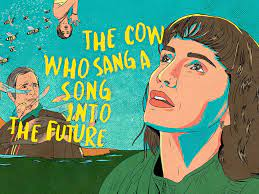
This Chilean film seamlessly blends family trauma, environmental disaster, and the effects of fast-paced technological advancement. It follows the main character Cecilia’s mother, Magdalena, who returns from the dead to unearth the realities of the family’s dairy farm. As she moves through the home she once knew, Magdalena disrupts the technological world around her and reveals the sufferings of the farm’s cows and her family. She takes her daughter’s phone and explores the possibilities of a world she is no longer a part of. Her presence creates a clear link between the technological and ecological spaces the dairy farm occupies. Without ever speaking, she calls attention to the ethics of the treatment of the cows on the farm and the harm the family has caused in their endeavours to mass produce dairy products. This film turns the surreal into a possibility and forces its viewers to question their relationship to the environment.
“We Rise for Our Land” dir. Kurt Otabenga Orderson
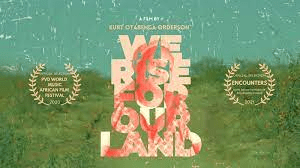
Oderson delves into the lives of women in Eswatini, Zambia, and Mozambique as they fight for ecological restitution and equitable land rights. It explores the complexities and nuances of land ownership in each country, but at it’s core it calls for access to land for women to farm and create a livelihood for themselves. While the film’s focus is on land distribution and the effects of gendered colonialism, I think it’s important to discuss why these women are being denied land today. As the activists explain, mining companies and large agricultural firms purchase the land before the locals get a chance. The companies mine for minerals such as cobalt, a material necessary to power much of modern day technology, while local women are denied the right to grow their own food.The documentary reveals the reality of technological advancement in the West; is land theft from women in Southern Africa. While I believe in celebrating the advancements made by women in the world of technology, I am careful to consider what this advancement means for women globally. Is the price of a new phone worth the cost of women losing access to land?
ART
“Ustadha [Woman Teacher]” by Arwa Abouon
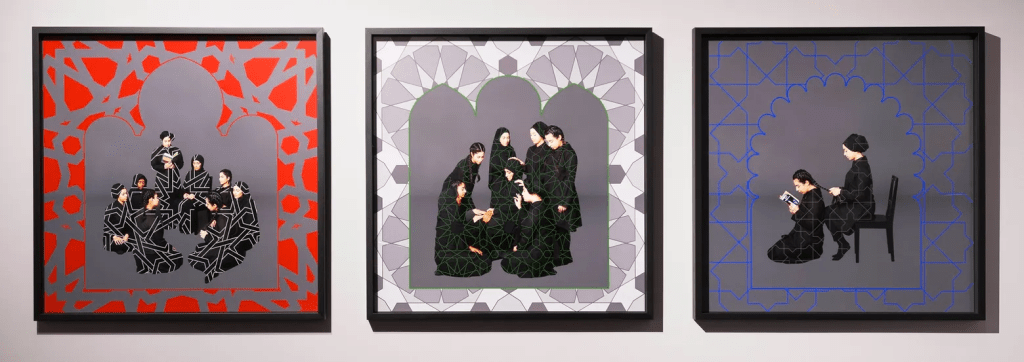
I decided to include Arwa Abouon’s work in this column not only for its demonstration of photography as an art form, but for its use of technology in blending her heritage and her love for art. Standing in front of these pieces, you won’t have to search far for their meaning. They convey a deep sense of connection, the values of teaching and sharing, and matriarchal spirit behind the modern world they were captured in. It’s no coincidence Abouon uses technology to create the geometric designs surrounding her family, it allows centuries of tradition to be combined with a new art form. In a way these photos represent Abouon herself, a Libyan-Canadian artist who lived in modern and traditional spaces simultaneously. All her work is deeply emblematic of her ideologies and heritage as an artist and an immigrant. She brings art, family, and technology together. I strongly encourage you to see this piece in person at the Montreal Museum of Fine Arts to truly appreciate all it has to offer.
BOOKS
“The Marrow Thieves” by Chérie Dimaline
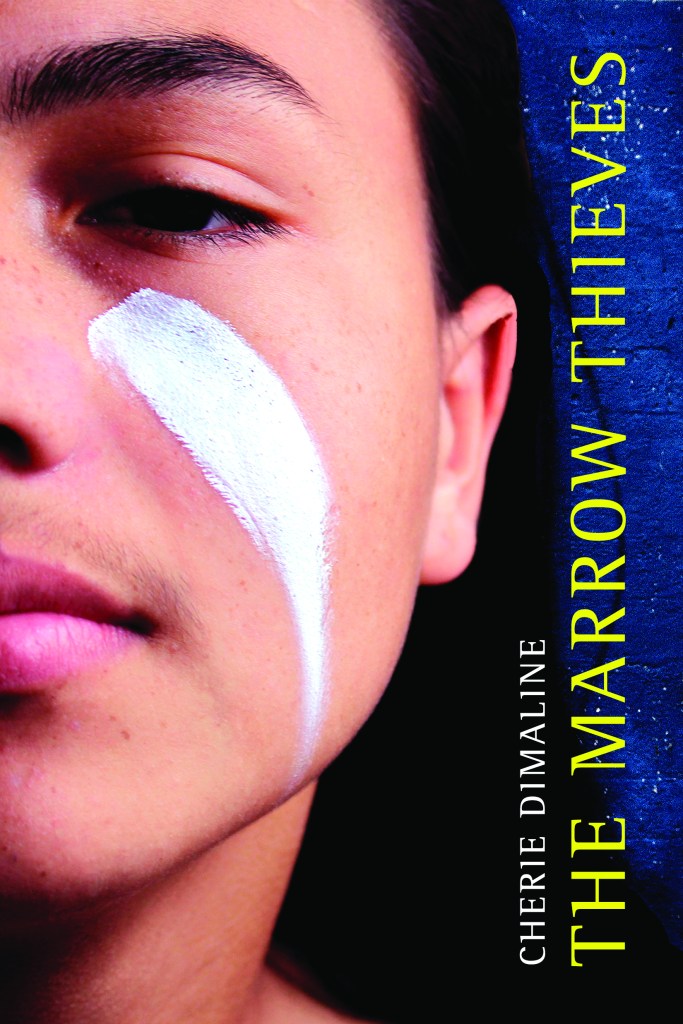
This Metis author takes us to a dystopian world where Indigenous people are hunted for their bone marrow. The story follows a group of Indigenous people from all walks of life as they try to make their escape from a world that wants to harvest their dreams. The women and girls in this novel are full of dimension and are integral to the plot. Characters like Wab and Riri truly make this novel whole. The larger themes presented by Dimaline, namely the connection made between Indigenous practices, territory, and technology, loom in the real world. Although a dystopian fiction novel, the story creatively reflects the reality of settler colonialism and the appropriation of Indigenous peoples and their practices. Dimaline reminds her readers of the sacredness of culture and its vulnerability against technology and greed.
“Translating Myself and Others” by Jhumpa Lahiri
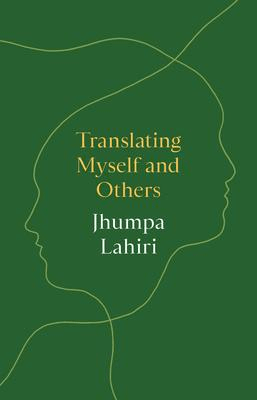
Translation is integral to globalization and understanding one another. Jhumpa Lahiri, a British born Indian-American author decided after visiting Italy that she would learn Italian. She documents her struggles and findings in becoming a translator of Italian novels and as an author whose work gets translated. Lahiri demonstrates the possibility of going global. She has an incredibly rich understanding of languages and their importance in the contemporary world. Technology has given her the opportunity to travel the world and fully immerse herself in different cultures. Without having any ties to Italy, she was able to grow her understanding of the language and learn to translate the authors who inspired her. She is proof of the power of knowledge and the capacity to understand one another.
T.V.
Downton Abbey Season One
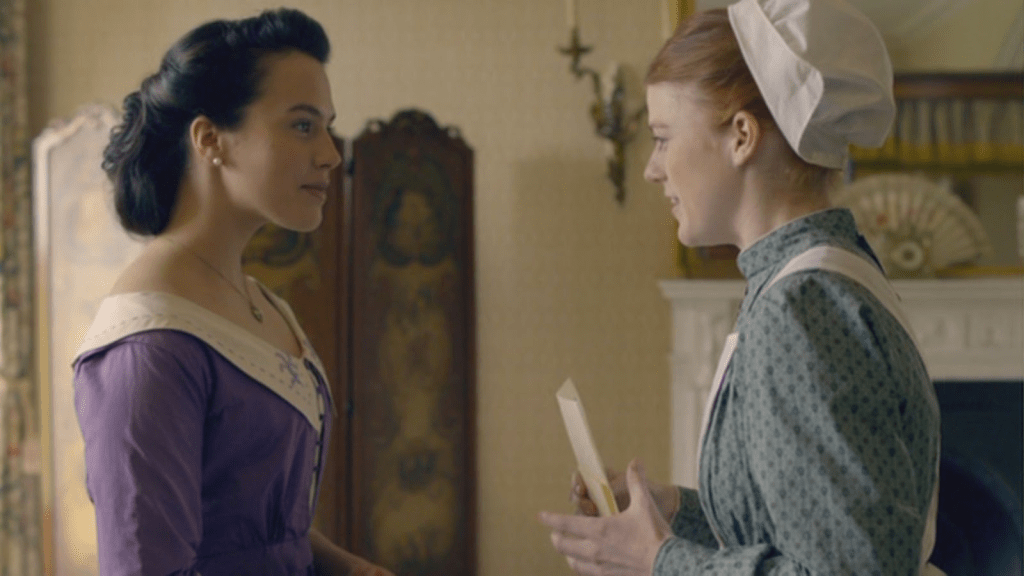
You’ve probably heard of this iconic TV show, but I think an inspection into its feminist ideas is pertinent to this month’s theme. Season one follows the Crawley family through its succession troubles following the sinking of the Titanic. One relationship worth highlighting is between Sybil Crawley and Gwen, a ladies maid. Gwen wants more for herself than to be a lady in waiting, and Sybil, the feminist champion of the show, helps her realize her potential. Crucially, Sybil buys Gwen a typewriter so she can become a secretary. This use of technology is critical to Gwen’s journey to leave Downton but is also important because it highlights the economic freedom women can achieve by adapting to modernity. Downton Abbey is ultimately a show about transformation and living on the cusp of a modern world and Sybil plays an integral role in pushing the women in her life to think beyond the confines of the old English aristocracy.
MUSIC
Girls Don’t Sync

Nothing says women in tech like women in techno! Matty Chiabi, G33, Sophia Violet, and Hannah Lynch make up this DJ collective based in London. They bring an infectious energy to their performances not only through their incredible music but through their clear love for each other. They have vowed to get more women into their trade through DJ mentorship and tutoring. They’ve taken the English underground by storm, while expressing themselves through their friendship and amazing music. They’re paving the way for women in the techno genre while turning the club scene on its head. I’ve been completely enthralled by their performances and I’m sure you will be too!
 Intersections